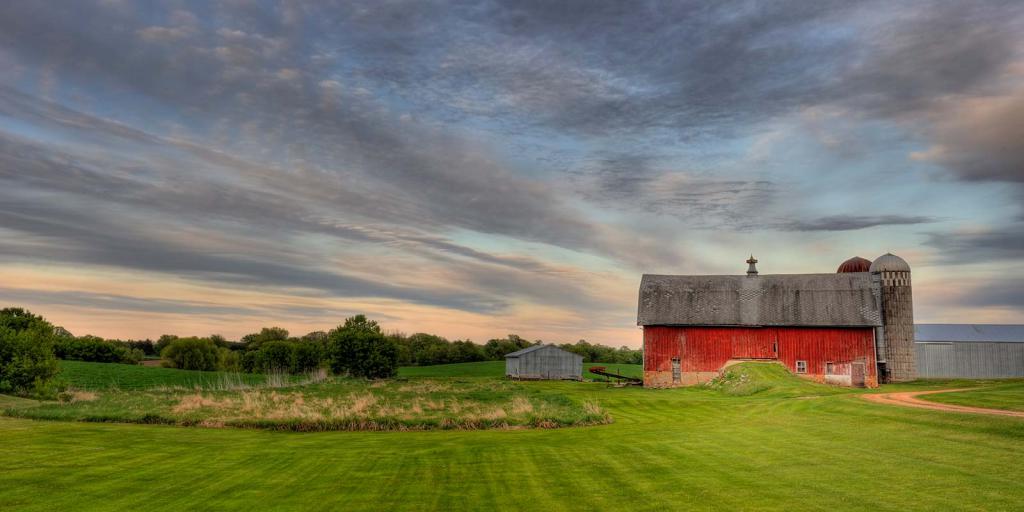
| At the 1/28 there was a presentation regarding the number of events allowed on farms.
The current number allowed annually is 20 and the suggestion is to increase that to 30.
The primary concern is weddings on farms, and properties for agricultural vs commercial use.
From the publicly recorded Agenda Item Details
"Background Issues to be Aware of:
At the March 7, 2017 meeting, Commissioners formally adopted the Tourism and Hospitality Master Plan as part of the Comprehensive Economic Development Strategy. One of the identified priorities in the Plan was to address the regulatory issues that may hinder tourism and hospitality progress in the County. At the November 27, 2018 meeting, Commissioners approved a Tourism Regulatory Task Force to make recommendations regarding issues affecting the tourism industry. The list of Task Force Member is attached. On October 22, 2019, Commissioners discussed the issue of number of events on farms and directed DED to return with a recommendation.
Summary Information:
The Tourism Regulatory Task Force has met eight times over the past year to discuss issues affecting tourism. The primary topic for the group has been the number of events on farms per year. The group strongly supports tourism and agri-tourism in St. Mary’s County. Currently, the County Zoning Ordinance allows 20 temporary events. After in-depth discussions at each Task Force meeting, the group could has endorsed a compromise position of increasing the number of events from 20 to 30 per year, with some conditions. The Task Force members have strong opinions about this issue and want to ensure their agreement to compromise does not indicate they are have changed their beliefs about increasing the number will positively or negatively affect the County.
Recommendation: Increase the number from 20 to 30 with the following conditions:
Must have a private road to the venue or a maintenance agreement with the other party’s knowledge of this use
Events must end by 10 pm
If the venue location is in the Critical Area:
Amplified music must be in a closed space
Operator must maintain a website that lists the dates/times of events (at least 30 days prior to the event)
The County shall revisit this increase in two years to see if modification is desired.
Visit St. Mary’s MD (VSMMD) will be responsible for meeting with venue operators to ensure they understand these conditions.
VSMMD will be the recipient of any complaints during the two-year period. No direct enforcement activity will take place – a “self-policing” policy will govern the adherence to the parameters, with the knowledge that the County will revisit the issue in two years. VSSMD has also published an Events Guide document (attached) for operators to help guide their operations and mitigate potential issues.
To provide additional information, DED utilized MACO to conduct a survey of other counties in the State. In addition, DED sent a survey to farm wedding venue operators in St. Mary’s. The results of those surveys are attached. Eleven counties responded to the MACO survey. The information from other counties does not point to a single “best practice.” Counties regulate weddings in many different ways and have different rules. Three of the counties are reviewing the wedding regulations. They survey of venue operators resulted in four responses (out of 11). Asked what the maximum number of events they would like to see, they responded from 16 to 30.
Below is a summary of the key discussion points from the Task Force:
Weddings are the primary “event” on farms and there is an increase in demand for wedding receptions on farms. Visit St. Mary’s MD (VSMMD), the tourism arm of the County, has been working hard to bring more weddings to St. Mary’s County. and wedding receptions on farms have been gaining in popularity over the past several years. VSMMD has been attending wedding trade shows in an attempt to bring awareness to what St. Mary’s County has to offer and to get more business for the local venues and hotels. The number of wedding venues on farms has increased recently.
Weddings positively affect tourism and are an economic development asset. Property owners can receive fees of $5,000 or more per wedding. In addition, guests stay in hotels and eat at local restaurants during their stay. The Tourism and Hospitality Master Plan prioritizes increasing hotel stays during the weekend when business is typically slow, and it specifically lists increasing the number of weddings allowed on farms as a goal. Because most weddings occur on weekends, hotels benefit greatly from these events. In addition, bringing wedding guests to St. Mary’s County may result in future visits from guests who discover the beauty of our region.
Weddings can help farmers remain profitable. As the agriculture industry in the County has moved away from tobacco, farmers have looked to other ventures to remain profitable and maintain their agricultural lifestyle. During the tobacco transition period farmers were encouraged to embrace diversity in their farming operations and were assisted in engaging in additional agricultural revenue streams including agri-tourism. The blending of agriculture and tourism has been a win-win in St. Mary’s.
Some agencies include weddings or events on farms as “agri-tourism,” while others do not. Regardless, hosting events is a way for owners of agriculturally zoned land to generate revenue which may help keep the land from further development.
The primary complaint stemming from weddings on farms is noise. Neighbors can often hear the voices of guests and music, especially amplified music, and this is often not welcomed. Venues that are near other residences and especially those near water are more likely to receive complaints. Operators who keep amplified music within a structure or tent, who closely monitor amplified sound, who set ending times, and who instruct wedding guests to keep voices down while outside may hear fewer complaints. Although noise is the primary issue, other issues include road/driveway use, parking, and lost guests turning down the wrong driveway.
As the number of events increases, the activity can be perceived as being more commercial in nature and less agri-tourism. If holding events is secondary to the primary purpose of a farm (which is to produce and sell some type of agricultural product), then as the number of events increases, it can be perceived as becoming the primary business of the farm. If a farm’s primary business becomes a wedding venue, some believe that the business should be subjected to more commercial type regulations.
Because each farm has unique characteristics, issues may not pertain to all venues and establishing regulations becomes more complicated. For example, one farm may have 500 acres, may not share a road or driveway, may not have close-by neighbors or may conduct events in the middle of the property. Another farm may share a driveway with neighbors, may conduct events at the edge of their property near neighbors, and may be near the water which can sometimes carry sound. Limiting the number of events and applying use regulations may not be as warranted for the first example compared to the second example.
Policies/guidelines that would govern events currently do not exist. There are no guidelines, policies, or regulations today that pertain to sound, times/days, location, notification, or any other factor. Establishing general guidance polices would set basic rules for venue operators and may reduce complaints. For example, ending events by 10:00 p.m. could lower grievances.
No permit is currently required, and no complaint avenue currently exists. Owners of larger parcels (50 acres or more) may simply begin conducting weddings and receptions on their properties with no permit and no review, which is in alignment with other agri-tourism activities. Also, there is no established process of a neighbor has a complaint pertaining to an event.
While weddings are most often discussed, other events fit into the current regulations. Retirement parties, anniversary parties, birthday parties, corporate retreats, and other events are also included in the limit of 20 temporary events per year.
Finally, LUGM pointed out that another option for those wishing to host more than 20 (or 30 if Commissioners raise the number) is to apply for a conditional use as a “Conference Facility,” which is allowed in the Rural Preservation District (RPD) zone. Conditional uses must be approved by the Board of Appeals and the facility would need to obtain a building permit. There are no restrictions on the number of events if this conditional use is approved, however, the Zoning Ordinance lists some General and Conditional Standards that applicants must meet.
Collaboration: The LUGM Director is a member of the Task Force. The County Attorney’s Office has also been consulted on various issues."
From the public recorded vote.
"I move to direct the Land Use and Growth Management Department to process a zoning text amendment to change the cumulative number of temporary events for use 127 "Shows and Events Indoor" and use 128 "Shows and Events Outdoor" and come back with a recommendations of the Comprehensive Zoning Ordinance from 20 to 30 per year.
Motion by Commissioner Todd B Morgan, second by Commissioner Michael L Hewitt.
Final Resolution: Motion Carries
Yea: Commissioner President James R Guy, Commissioner Eric Colvin, Commissioner Michael L Hewitt, Commissioner Todd B Morgan
Not Present at Vote: Commissioner John E O'Connor" |